Most new businesses don’t crash and burn. They just… never really open. No way to book, no way to pay, no clear path for a customer to say yes. And if nothing is operational, there’s nothing to succeed or fail.
This isn’t a motivation problem or a “bad idea” problem. It’s a systems problem. Let’s talk about what actually stalls most would-be businesses — and how to fix it fast.
The Invisible Graveyard of “Almost Businesses”

When people quote business failure stats — 20% gone in year one, half by year five — they’re talking about companies that actually started operating. Those numbers don’t capture the much larger group that never gets far enough to show up in the data.
This is the invisible graveyard: businesses that stay stuck in planning mode.
Common reasons businesses stall before launch include:
- No clear, simple business model
- Unclear target customer
- No defined way to deliver the service
- No setup for booking or payments
In other words, lots of thinking… very little operating.
Over-Planning Is the New Procrastination
From the outside, it looks responsible: more research, more tweaking, more “getting ready.” Under the hood, it’s often fear wearing a productivity costume.
When uncertainty feels threatening, owners often default to avoidance behaviors. That avoidance can look like:
- Rewriting business plans
- Tweaking offers endlessly
- Comparing tools and platforms
- Waiting for the “right” moment
Perfectionism and fear of failure feed each other. The stakes feel huge, so taking a small public step feels risky — even though it’s the only way forward.
Meanwhile, real demand quietly goes somewhere else.
Why Booking and Payment Matter More Than Your Logo
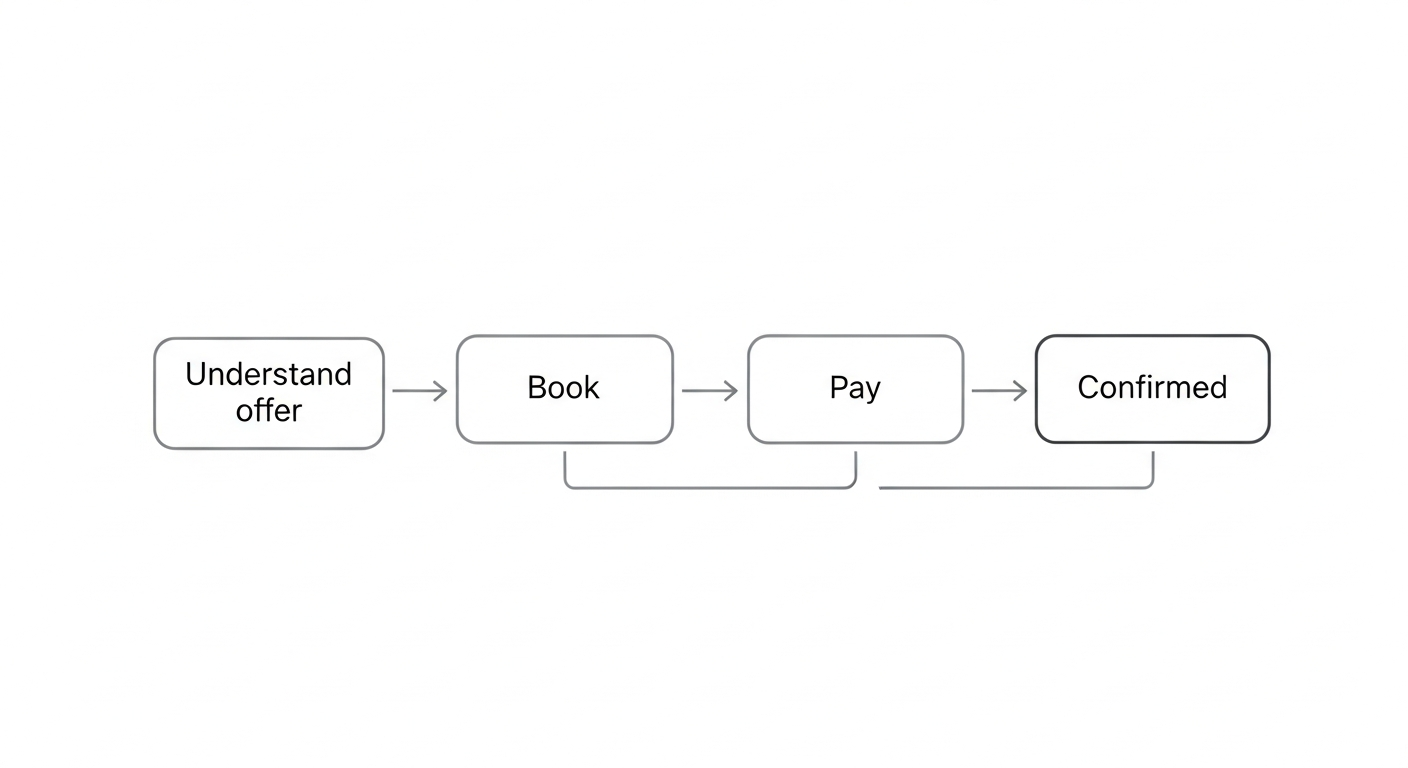
Here’s the blunt truth: if a customer can’t easily book and pay, many won’t.
Ease of buying consistently shows up as a major factor in customer decision-making. Speed and convenience aren’t “nice to haves” anymore — they’re basic expectations.
Booking and payment systems do three critical things early on:
- Remove friction between interest and commitment
- Reduce back-and-forth and no-shows
- Create trust through confirmations and receipts
For solo businesses — consultants, coaches, cleaners, dog walkers, therapists — integrated booking and payment can often be set up quickly. That single step frequently turns “thinking about it” customers into paying customers.
“No Market Need” Often Hides an Operations Problem
You’ve probably heard that the top reason startups fail is “no market need.” That’s often true — but it’s not the whole story.
Dig deeper and you’ll see that many so-called market failures are tangled up with operational breakdowns:
- Poor pricing
- Inconsistent delivery
- No clear intake process
- Cash-flow problems caused by weak payment systems
If customers can’t reliably buy, receive, or pay for what you offer, the idea never gets a fair test. Sometimes the market rejects the offer. Other times, the system never gave it a chance.
Side Hustle Culture Made This Worse (and Better)

Since 2020, side hustles and solopreneurship have surged. Business applications remain historically high, and millions of people now earn income independently or on the side.
This is good news — more people betting on themselves. But it also means more people stuck in limbo between “idea” and “business.”
AI tools and online platforms lowered the barrier to entry, but they also created decision overload. Too many options. Too many opinions. Too many tabs open.
What “Operational” Actually Means (Plain English)
Forget 40-page business plans and fancy org charts.
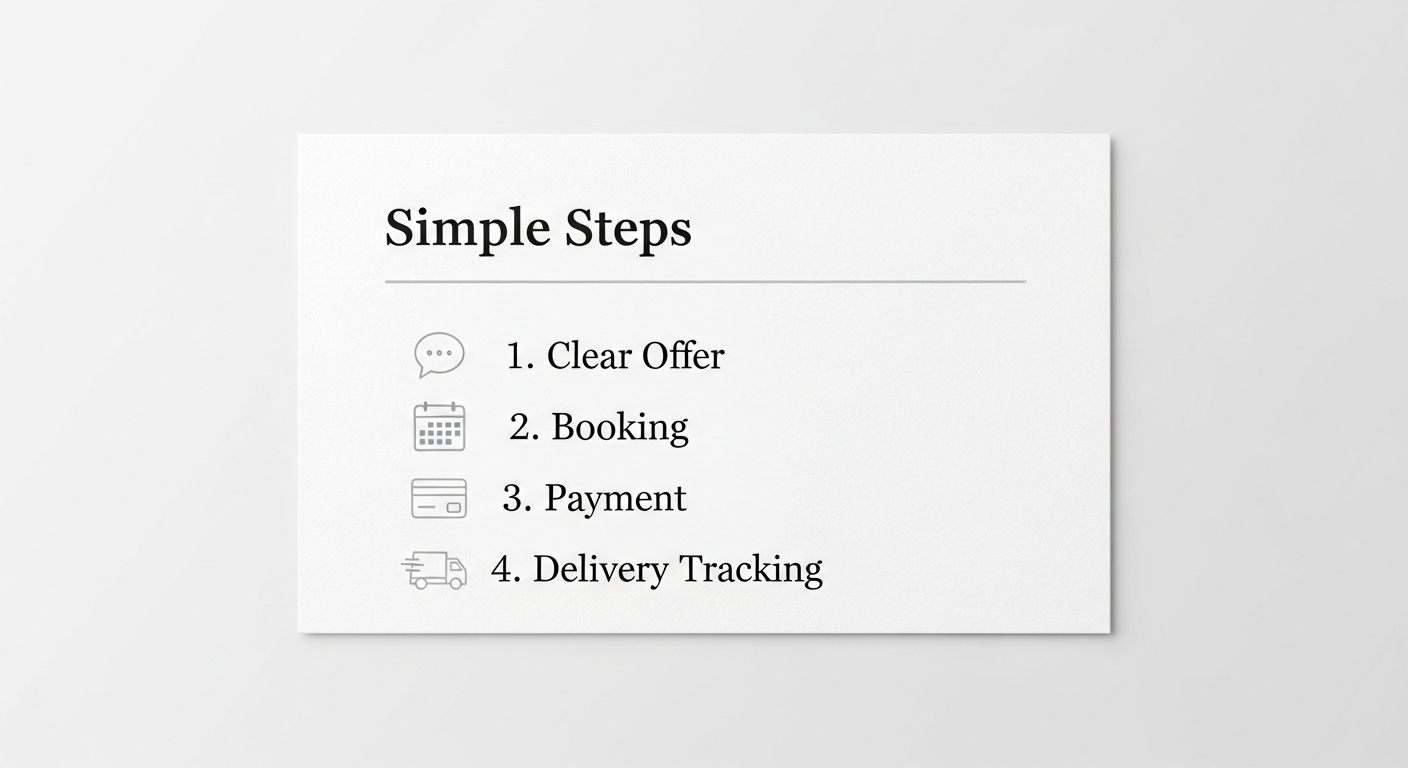
For a solo or service-based business, being operational means:
- A stranger understands what you offer
- They can book or request the service
- They can pay
- You can deliver and track the work
That’s it.
Operations isn’t corporate bureaucracy. It’s the set of systems that turn interest into fulfilled, paid work — day after day.
The Only Systems You Need in the First 30 Days

Early on, complexity is the enemy. A common mistake is trying to build a “full business” instead of a working one.
In the first month, focus on just four things:
- A clear offer
- Who it’s for
- What outcome it delivers
- What it costs
- A booking or intake method
- Calendar, form, or request flow
- Minimal back-and-forth
- A payment system
- Cards accepted
- Automatic confirmations
- Simple invoices or checkout
- Basic record-keeping
- Who your clients are
- What was delivered
- What was paid
That’s enough to operate. Everything else is optimization.
Why Franchises Launch Faster (and What to Learn From Them)
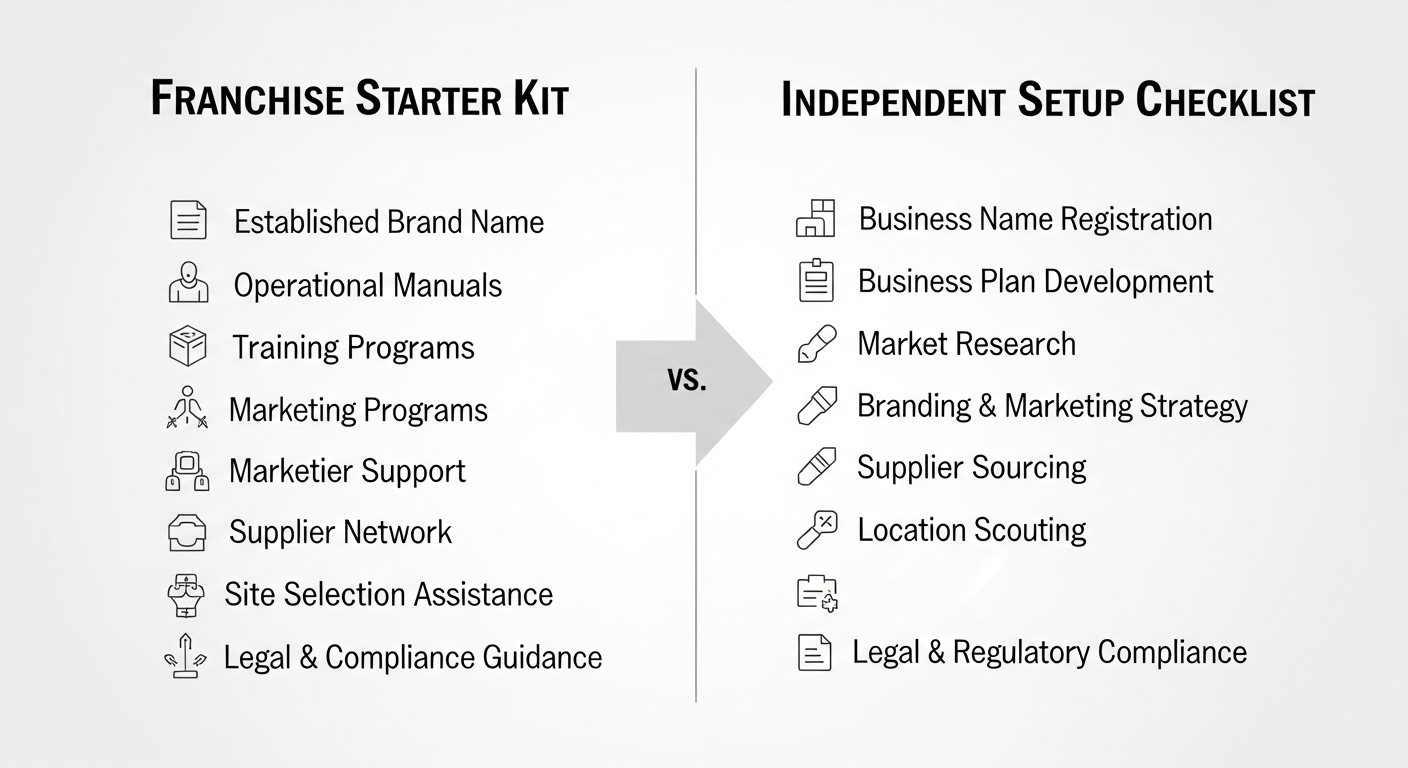
Franchises aren’t magically better ideas. They remove decisions.
They hand new owners:
- Proven processes
- Standard pricing and offers
- Training and scripts
- Integrated booking or POS systems
This “operational in a box” approach shortens the time from signing paperwork to serving customers.
The lesson for independent owners isn’t to buy a franchise — it’s to stop reinventing everything. Borrow proven systems. Use templates and tools. Ship something usable.
The Psychology That Keeps You Stuck
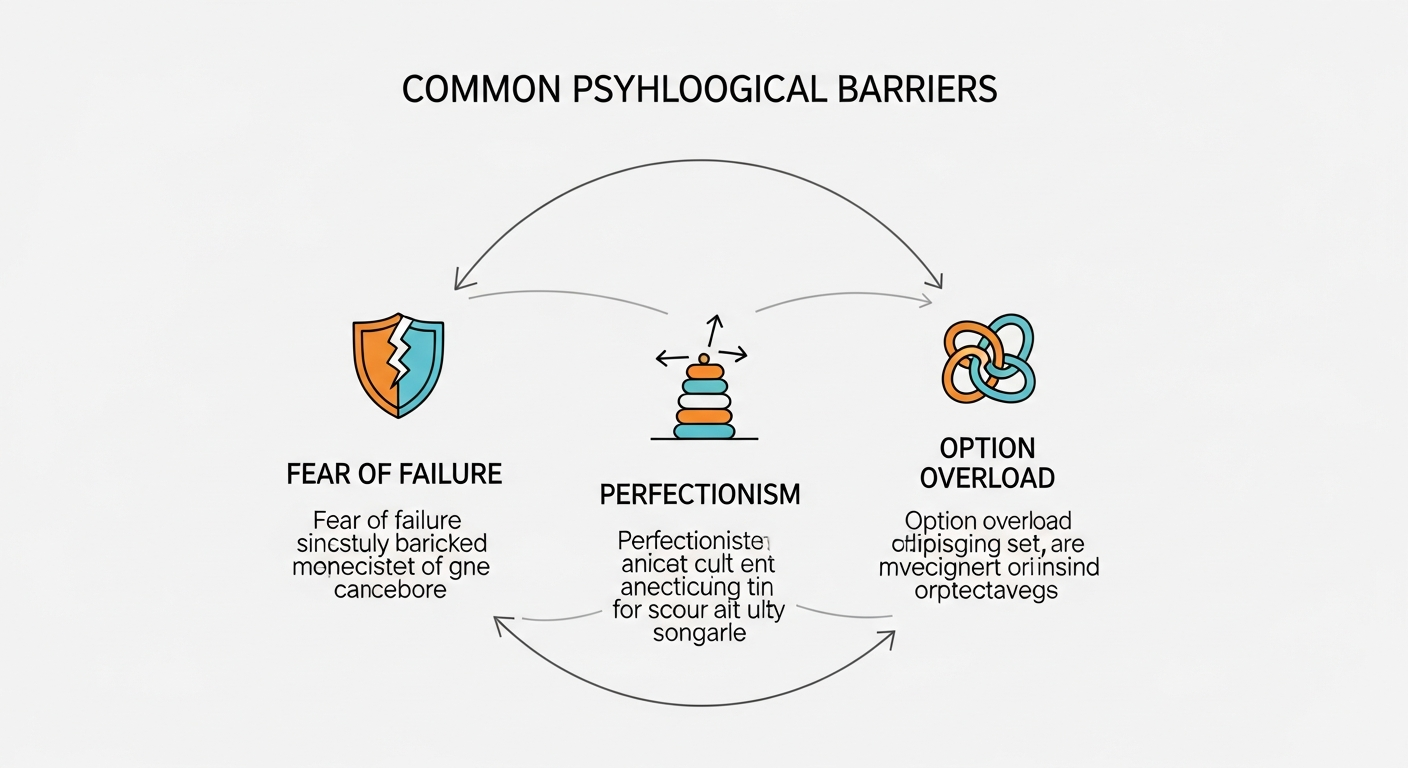
Three patterns show up over and over in stalled owners:
- Fear of failure
- Public action feels like judgment
- Perfectionism
- “It’s not ready yet” becomes permanent
- Option overload
- Too many tools, too many paths
When uncertainty feels like a threat, people avoid action. Ironically, small action is what reduces uncertainty fastest.
You don’t think your way into momentum. You build it.
A Practical Definition of “Operational”
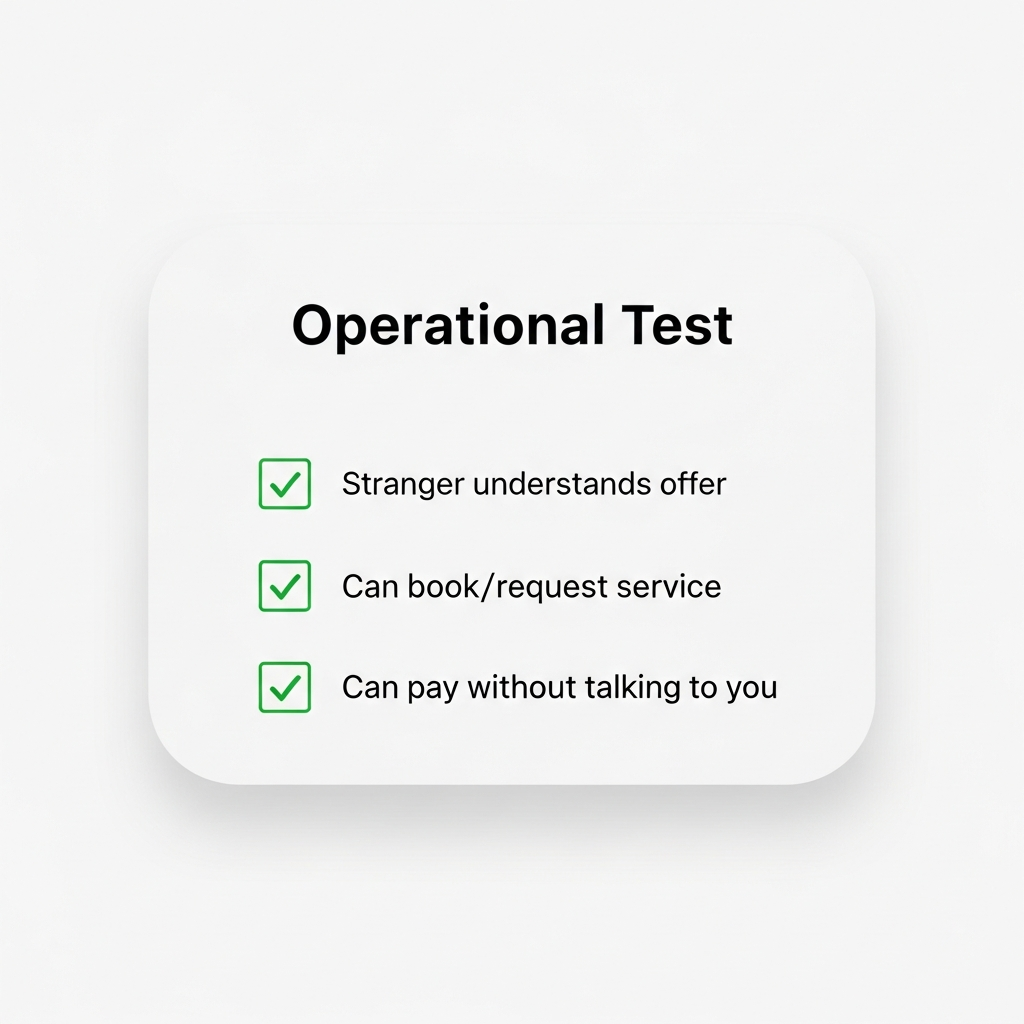
Here’s a working rule you can use today:
Your business is operational when a stranger can understand the offer, book it, and pay — without talking to you.
If that’s true, you’re in business. If it’s not, you’re still planning.
Once that baseline exists, improvement comes from watching real customers, not theorizing in isolation.
What to Do Next
If you’re stuck in planning mode, here’s how to break it — step by step:
- Write a one-sentence offer
- “I help ___ get ___ for ___ price.”
- Choose one booking or intake method
- Calendar, form, or request — pick one.
- Turn on payments
- Accept cards. Send confirmations. Done.
- Ignore everything else for now
- Branding tweaks can wait.
- Advanced marketing can wait.
- Perfection can wait.
- Make it live
- Public beats perfect. Every time.
Most businesses don’t fail because the idea was bad. They fail — or stall — because no one ever finished setting up the door customers walk through.
Get operational first. Everything else gets easier after that.